Leaf 0.3 - The Server Behind Roomy
For the last couple months we've been iterating on Roomy with its brand-new architecture, and we're finally ready to talk in more detail about the not-so-secret sauce that will power Roomy moving forward.
We have to talk about open source licensing.
Digital power is created through the interplay of mobilizing and organizing. Open Social protocols bridge the gap.
Data Ownership as a conversation changes when data resides primarily with people-governed institutions rather than corporations.
An overview of Roomy’s architectural iterations, from past to present.
A new Roomy release! This update includes a new website, an update UI, a work-in-progress Discord bridge, and lots of lessons learned.
New domain on roomy.space; backend-switch to Jazz for better performance and access controls; BeeKEM decentralized E2EE explained; notification markers for mentions & unreads.
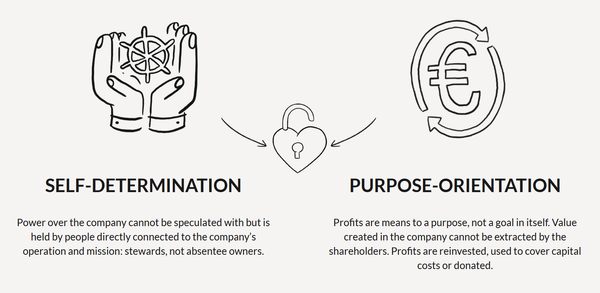
What if excess wealth derived from business couldn't be privatized? Through the levers of steward-ownership, companies can protect their purpose-oriented long term mission from the maligned incentives of absentee stakeholders.
A whole bunch of first-pass features; A path towards Roomy/Weird convergence; Temporary Backend Pivot (building on jazz.tools 🎶 for production-readiness).
The roomy.chat demo is back online! We've got new features and a totally revamped database. Let's unpack the state of Roomy with the latest update.
This post takes a look at ATProto from a different angle, and explores the value of some possibly less-noticed pieces of it.
To fully inhabit the World Wide Web you must fully embody your virtual self within it 🍵
Group chat is fertile soil for low-stakes ideation. With tending, seeds of thought can grow into structured, evergreen knowledge.
A technical deep dive on how Roomy chat works, combining ATProto and Automerge to create a resource-efficient group chat.
Roomy is (becoming) an open source group chat application. It's similar in scope to Discord, but built on open standards like ATproto for social discovery and Automerge for peer-to-peer connectivity. About 2 weeks ago we received a generous grant from Skyseed to develop a chat prototype on top of the
Three weeks have passed since our public MVP reveal. We're thrilled to report that all 25 early-bird slots have sold out; thank you! 😍 Nerd-tier Weird will still be available for just $25/yr (half price) during the next several months of our beta period. One year of service guaranteed Seeing
development
Make a $10 bet on where Weird will be in a year from now, and we will do our very best not to disappoint. Every paying customer is also an automatic stakeholder in the Weird indie enterprise.
status-quo
Mindfully growing a non-extractive company towards a 'steward ownership' end state.
pillars
'Weird the data importer' is our wedge into the data fortresses keeping our digital identities captive. PESOS - Recenter the publishing pipeline PESOS is an acronym for Publish Elsewhere, Syndicate (to your) Own Site. It's a syndication model where publishing starts by posting to a 3rd party service, followed by
status-quo
As it stands today, Weird is best understood as a single-page website generator, i.e. a minimalistic CMS. You put in some basic details about yourself and then, like an html-enchanted llama, Weird will spit out a website! As the end of this year draws near let's take stock of
Leaf
Recently Christine Lemmer-Webber shared her 'recipe for the fediverse'. Let's see whether Leaf can meet her requirements.
Weird
How does Leaf Protocol compare to AtProto and ActivityPub?
Weird
You deserve a home on the World Wide Web that’s built to keep you safe; a magical place for virtual living that‘s yours for life, existing in a sociable web.
status-quo
By now our community holds space for dozens of builders working on community tools in service of the Open Social Web. We call this expansive community space 'Muni Town'.
FedCM, OIDC and IndieAuth are converging; Iroh gives us p2p superpowers; and, the Norwegian Buddhist Foundation has partnered with us as early adopters!
In the glory days of web 1.0, social websites would prominently link out to their digital neighbors via lists known as webrings; magical doorways to an expansive hinterland of digital villages.
The web is awash with reasons not to use Discord, especially for open source projects. One of the easiest ways to trend on HN is to rant against the use of Discord for OSS or information storage: In spite of countless pleas, not much has changed. Before Discord was the
Commune is an open source community platform, specifically designed for publicly available communities. We're designing tools for projects that thrive in an open environment, perpetually improved by their wisdom of the crowd. Built as a Matrix server extension (Synapse only for now; Conduit is coming) combined with a custom client
Chat is the minimum-viable tool for online organizing. Without complete control over our means of communication, our ability to organize depends entirely on the goodwill of the very same hegemonic incumbents which we seek to surpass.
We are thrilled to announce that Commune will be the recipient of a grant from the NLnet organisation, as part of their NGI Zero Entrust programme. NGI Zero actively works towards digital commons and trustworthy technological building blocks for the next generation of the internet. The goal is to provide
As Commune edges closer to an early-access release, I've been musing on the concept of the cozy web vibes that we intend to cultivate in our app. Internet friends My first foray into the cozyverse was IRC. Short for Internet Relay Chat, it's the precursor to the largely unchanged group
Online community platforms are assembly-kits for large, communal bonfires, designed to draw people towards the light and into the warm togetherness of community. I think the primary function of bonfire software is to create space for group-scale discourse. Riffing on thoughts about healthy information consumption, Tom Critchlow described his personal