On-protocol Organizing
Fighting bad networks with good networks.

Late last year I wrote about what a Digital Strategy for Organisations ought to look like in today's online environment, advocating for bottom-up community building in smaller networks of coherence.
If you're a grassroots organization, don't waste your breath yelling into the void of the "town square" to get your message out there. For it is not a town any longer, it's a megacity where any singular voice immediately drowns in the noise of millions.
And don't look for "followers", for anyone who's following you is simultaneously following a thousand other spokespeople, breathlessly proselytizing from atop their soap box every day.
There's a lot you don't want to learn from startup culture, but if there's one thing it has figured out it's how to go from nothing to something. When you're small you can do things that don't scale. That means reaching out to people directly to say "we like what you're putting out and we want you alongside us in our community".
Some months later Mosh Lee wrote an impassioned appeal to our fellow web nerds to begin Building for Organizers.
When we talk about social networks, we often focus on metrics like viral growth, daily active users, engagement rates. But the most enduring social networks aren’t the prettiest or the most addictive – it’s the ones that empower organizers.
Who Are Organizers?
When I say "organizers," I’m talking about coaches, teachers, volunteer coordinators, union stewards, event planners, health workers, running club hosts, activist organizers, and owners of community-based businesses like music schools, summer camps, and business improvement districts.
What unites them isn't a job title; it's their role in making decisions on behalf of a group – choosing the tools and setting the norms that help people connect with each other, contribute their strengths, and turn a collection of individuals into a functioning community.
The builders and the organizers need each other. Sometimes they're the same people, but too often they operate as separate cultures and tribes.
Organizers need better tools. For decades they've squeezed what little utility they could out of anti-social applications intent on capturing our attention into consumerist doom-loops rather than directing our attention towards pro-social ends.
Builders need higher purpose. We have lost sight of the why and who we are building for, making things simply because we can, not because our community requires it. Breathlessly chasing the next thing we live in service of technological advancement for its own sake rather than the people, all of us, who our technology is meant to serve.
Alongside many of my technologically minded peers, ever since I dedicated myself to the improvement of the Open Web and the protocols that undergird it I have enjoyed a greater sense of purpose and belonging in my vocation than ever before, and I was already pretty amped up about doing my part when I first got involved with the open source software movement a couple decades ago.
I want organizers to be as excited as I am about the phase shift happening on the web right now. If we technologists can help the organizers see what we're seeing, which is the potential for a systemic overhaul of the web as we know it, the organizers will understand what they can ask us to build for them.
This article will provide a crash-course in protocol-driven development. But before we bring the protocol into the picture, let's begin with the status quo of today's websites.
Regular websites
Here is a wonderful website made by a local organizer I know.
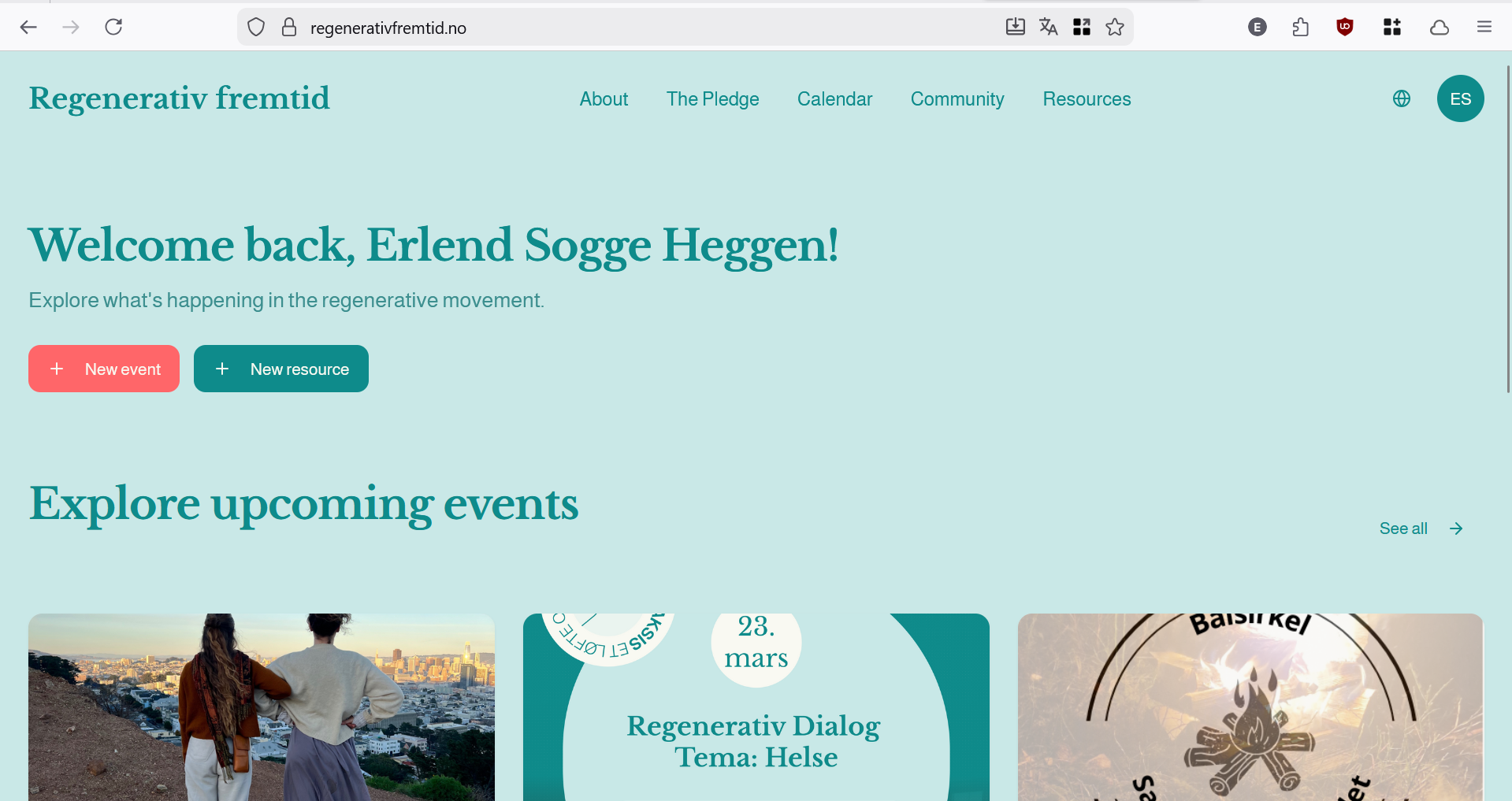
It's the website of regenerativfremtid.no, a social collective of ecology-aware activists and enthusiasts. The network began in a group message two years ago, now counting over a hundred people in its Signal group.
The soul and driver of the group, Idun, recently made a new website for her nascent organization with the goal of adding more dynamism through crowdsourced events, a members-map and shared learning resources all in one place. In other words she wanted to turn what used to be a static information site into a social space.
The site was made using Lovable, which is functionally very similar to WordPress or Squarespace (content-management systems), it just happens to use plain language instead of graphical widgets to assemble websites based on pre-existing building blocks.
I'm more concerned with the underlying building blocks than the method of assembly. Like WordPress or Squarespace, any website made using Lovable has one significant limitation: It's an island.
Those events, the resource links and the group's social graph, none of them are connected to a wider network of people. This is most vividly felt with the network map (the Community page). It's a great idea, and a testament to Lovable's flexibility enabling an organizer to articulate her vision to get this far.
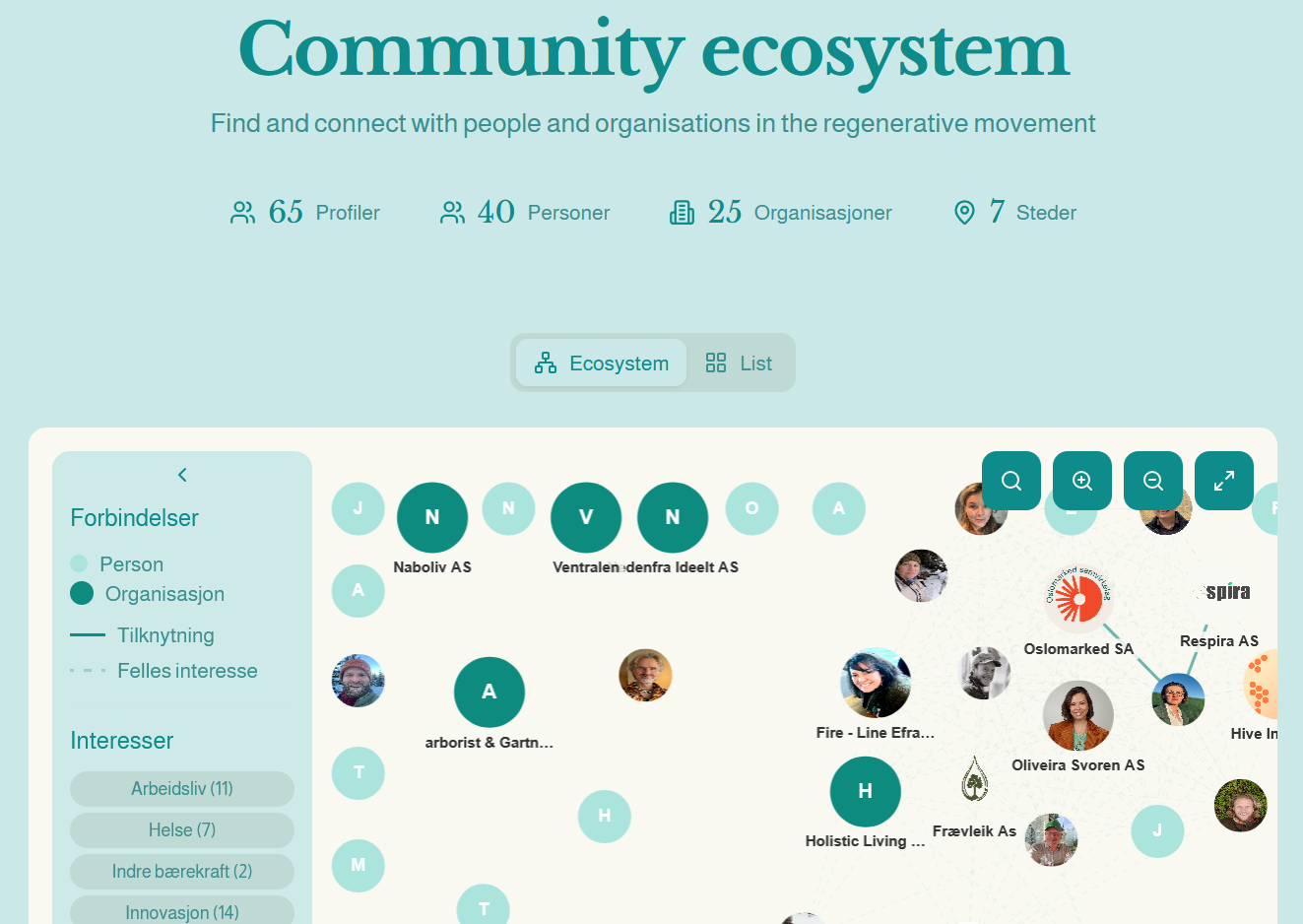
But as soon as we zoom out a bit, we're reminded of our isolation.
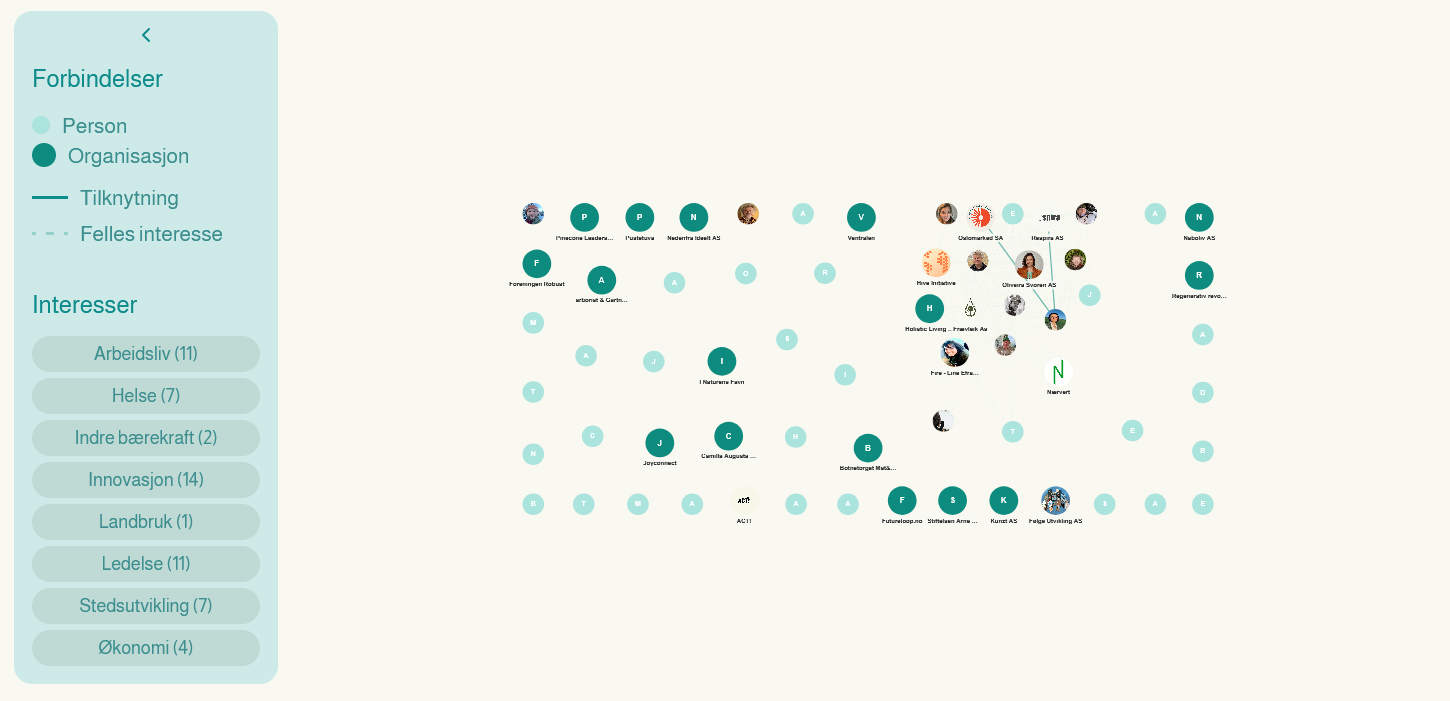
The way this ought to work is that as we zoom further out, the network graph expands beyond the loose confines of regenerativfremtid.no and starts showing members of other, affiliated groups, such as Nature and Youth, Doughnut Economics, Future in our Hands and many more.
Making this work is not Idun's job. She already did exactly what she was supposed to do by building a functional website that solves her organization's most pressing issues using the digital tools available today.
It's on us, the cybernetic nerds, to make better tools for tomorrow.
Protocols for connectivity
"Connecting people" was the original promise of social media in the 2010s, and it did an okay job of it. But for this to be possible we all had to pick one supreme market winner where all our digital identities would be put under centralized management.
For most of us that became Facebook. Several collapsed democracies and a world-wide mental-health pandemic later, we know how that turned out.
So we don't want that. But we don't want to stop being social on the web either. Is digital space ownership and digital connectivity an either-or proposition? That is certainly what Mark Zuckerberg would have you believe, and until recently he would be mostly right.
The web is undergoing a quiet renaissance. A new technology called the AT protocol is enabling independent websites and regional platforms to tie their comparatively small, local networks into the unified social graph of one big, global network where we can find the others once more.
Like the web, this social network is owned by noone and operated by everyone, as a digital commons. This decentralized form of stewardship was made possible for the world-wide web thanks to its evergrowing collection of web standards. That is, protocols that define how the web is accessed, whether you're entering into it via an Android's Chrome browser or a MacBook's Safari.
Some think that expecting the general populace to be protocol-literate is asking too much, but the basics of this stuff isn't hard to grasp. Protocols are just standardized ways of doing things that work best if we're all doing them the same way.
Take radios for example. You can buy any regular radio and listen to the same airwaves as anyone else because of the standardized AM/FM frequencies. I don't know what those letters mean, but I do know those letters represent a network of antennas and radios that have brought my family a lot of joy on car rides and cabin trips.
Every radio "speaks" AM/FM because it has been built in accordance with a standardized protocol for how to engineer a radio that can receive the AM/FM signal.
The AT protocol is another such standard, but for social media signalling. Messages, discussion threads, links, images, events and profiles, these are all common social media signals. Once a website speaks AT it can communicate with all other websites in the AT network, which we protocol nerds affectionately like to call The Atmosphere.
Now let's look at what this new technology and its accompanying network affords us. What does it let us do that we couldn't do before?
Atmospheric websites
Let's return to regenerativfremtid.no, this time imagined as one of many org websites connected to the Atmosphere network. How does its dynamic features like events, resources and people-mapping work now?
Social Events
regenerativfremtid.no, henceforth Reg for short, creates all of its events manually. Several of these events are sourced from partner organizations and friends who are managing their event through a different platform, so the event listing on the Reg site is just a duplicate made for extra exposure.
Logged-in users of Reg can RSVP and the website will increment its number of expected attendees. However, this is a separate counter from whichever events system the external organization is using, so now we have two separate lists of RSVPs. If each is showing only 3 people that is sending a very different signal to prospective attendees than the actual total of 6.
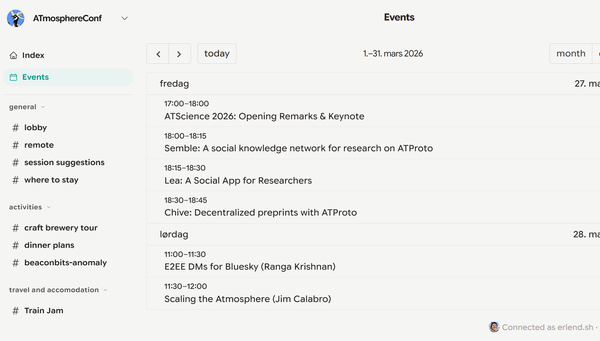
This is not a problem for websites in the atmosphere because all their events are based on a unified standard. Here is the same conference event on two different events platforms:
Reg could be using either one of these services as its events engine running under the hood while hosting events on its own domain and website just like it does now. So if I saw an event from smultringokonomi.no (Doughnut Economics Norway) on regenerativfremtid.no, my RSVP signal would be received by both sites.
This also means far less busywork since instead of asking external organizers to manually submit any relevant events, Reg could instead be subscribed to a community-curated list of aligned organizations whose events are automatically syndicated to Reg's calendar.
Social Resources
When many orgs connect their social graphs together, their collective knowledge compounds. The not-for-profit venture Cosmik understood this early on and used the foundations of the AT protocol to build Semble, a social network for knowledge.
Here's a collection I made some months ago:
My intent is to transfer ownership of the collection to the Post Growth Institute (which is in fact already present on the atmosphere as @postgrowth.org) as its steward.
It's an open collection that anyone can add links to, and any org's website could opt to feature this collection in their local resource hub. Likewise, Reg's own collections could be syndicated to other sites for greater discovery of both the collection and its steward.
Social Networking
If we looked at that Community Ecosystem map from the vantage point of an atmospheric website, the 100 people in Reg's people graph are just the beginning. Zooming further out I'd be seeing hundreds of people from dozens of other mission-aligned orgs like Future in our Hands, Attac and Rethinking Economics.
Among them would be people like Ellen and Jan Walter, two fellow advocates of democratic company models that I met last year essentially by word-of-mouth. If our networks served organizers instead of advertisers, perhaps we would have connected a whole year earlier?
One-stop shop
This is all possible right now with applications built on the AT protocol. They just haven't been glued together into a cohesive 'website generator' experience quite yet.
An experienced web developer could remake regenerativfremtid.no as an atmospherically connected website in a matter of days, but it would lack the administrative user-interface Idun the organizer requires to have agency in her own website.
As of today the closest thing we've got is probably the widgets-based website generator called blento. It's not meant to be an advanced CMS like WordPress, but it effectively demonstrates how all sorts of different web apps in the atmosphere can be remixed together as building blocks of an independent website.
atmos.rsvp for events, semble.so for links, sifa.id for professional profiles, leaflet.pub for blogging, roomy.space for group chats and on and on and on, all enmeshed with the connective tissue of a collaborative hivemind.
Organization as destination
If non-profits, unions and activist groups want to reclaim their digital agency they must participate more intentionally in digital space-making on the Open Social Web.
Organizations can be more than participants in the atmosphere, they can be many people's initiation into it.
We've been focusing on the AT protocol as a standardized social-media signal so websites can talk to each other. The other groundbreaking affordance of this protocol is the standardization of identity and its accompanying data.
AT protocol decouples your personal data, including your identity, from the platforms that use it. Platforms can and often will host the data of their users as the easy default, but it's not locked in place.
Years ago when I first signed up to the Bluesky microblogging platform my data storage silently defaulted to their servers. But now, after a painless transfer a month ago, my data is hosted in Europe by the non-profit institution Eurosky. Bluesky's access to my data is now mediated through a European data-steward, under the jurisdiction of EU regulations.
Herein lies an incredible opportunity for organizations. Trustworthy institutions like Eurosky provide openly available infrastructure for personal data storage. Building on top of this foundation, organizations can themselves become regional micro-platforms.
Web of organizations
Many people nowadays are in the process of getting off the internet entirely, and while I think reaquainting onself with life offline is an excellent idea, giving up on the internet entirely would relinquish its immense organizational power to the very corporations that make it so unlivable.
What if people's re-entry into the digital sphere was mediated by the local-area organizations that represent the best of human nature?
Another one of the AT protocol's standardizations is to designate usernames as web domains, so as you surf the network you'll come across names like @erlend.sh, @anirudh.fi, @tessa.germnetwork.com, @mosh.bsky.social and @gordon.bsky.social.
That is the username they use to log into a multitude of AT-powered applications.
As I continue traversing through the atmosphere I'd like to start seeing activity from names like idun.regenerativfremtid.no, trude.framtiden.no, einar.framtiden.no, diego.attac.no and ylva.nu.no as a result of activists choosing to register their first AT profile through their favorite organization, much like professors using their university-provided email address as their public means of contact.
Remember, the burden of data integrity and service availability rests with infrastructure providers like Eurosky. Organizations merely provide the entryway into the network, and a sense of place and belonging within it. Like the location of your data, this domain-affiliation is not fixed in place, but whichever domain-name you land on first will typically last a long time, all the while advertising that organisation's existence to your peers.
Once someone has signed up on regenerativfremtid.no they can be logged into any other atmospheric org-site with a single button-click. Every participating organization becomes an onboarding mechanism for the entire organization-verse of interoperating websites.
LinkedIn for activists
In one final exercise of the imagination, think back to that Ecosystem Map. But instead of the localized view of one specific organization it's a comprehensive index of all organizations in a large region, like a whole nation.
For Norway, frivillig.no is that index. It's an excellent service, listing thousands of organizations and their respective jobs-to-be-done.
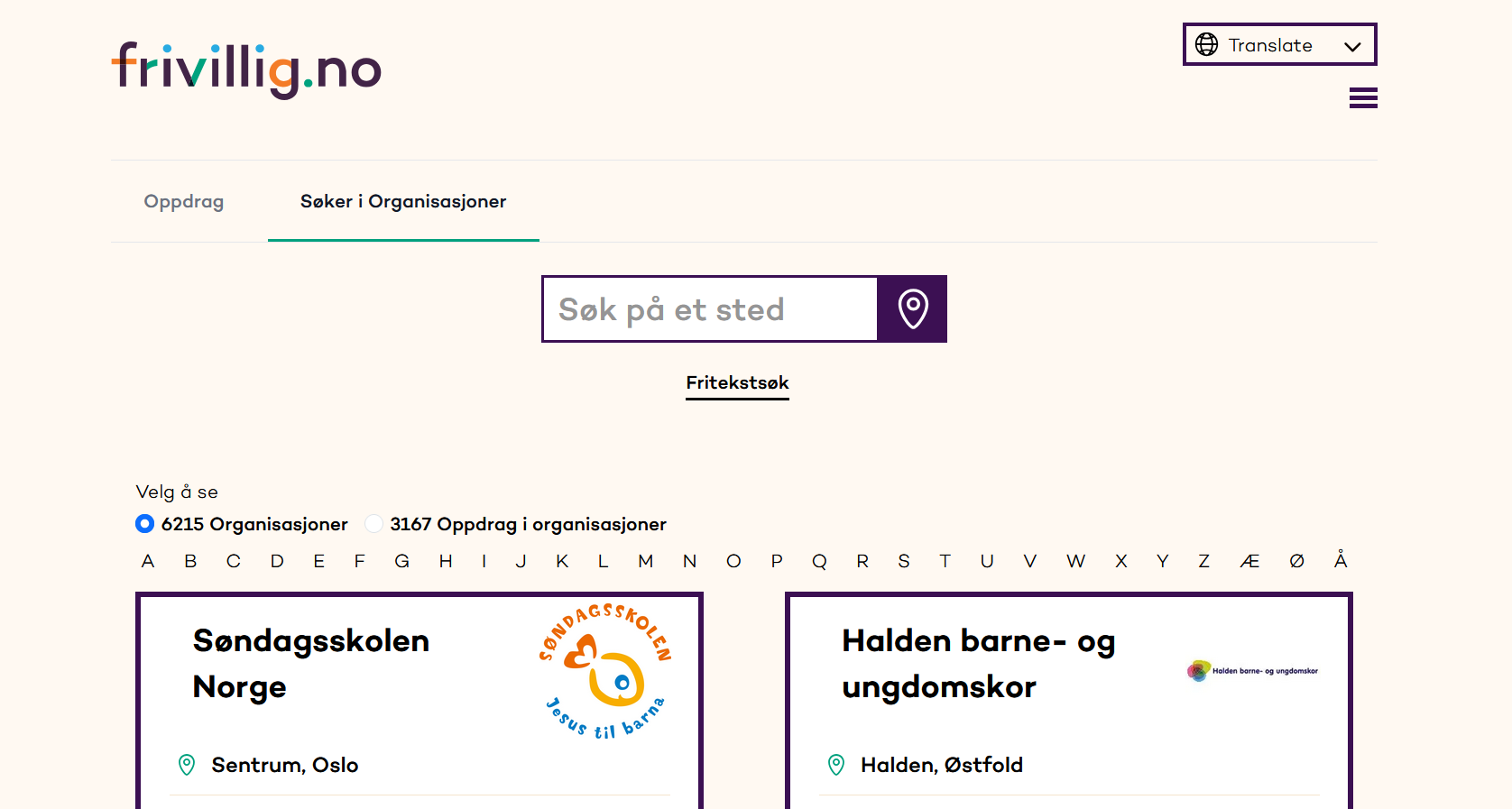
Yet even though it supports user registrations, it's not yet a network. It doesn't actively make connections between orgs and people. It acts as a mere jump-off point when it could be a foundational destination; a central hub for all volunteers, organizers and activists in Norway.
Whether you start your organizer's identity there (erlend.frivillig.no) or activate it by logging in with an existing account (erlend.attac.no), this could be the place where all your organizational engagements in Norway are recorded.
Here's an example activity graph from sifa.id, an AT-based competitor to LinkedIn just a few weeks old:
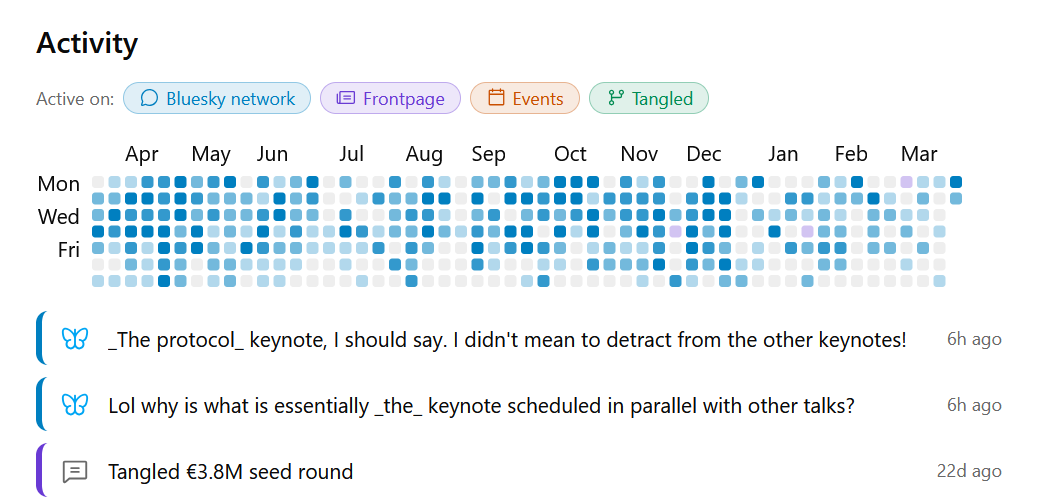
Imagine this in your profile on frivillig.no, except the 'platforms' it reflects activity from are organizations, not consumer apps. The reusable components necessary to build this with ease are already being made, they just need to be re-contextualized.
This profile would log the various events and projects you've been involved with as an activist in Norway. Only what you've opted to share publicly of course, but the more public our engagement the greater our connection to common cause, facilitated by a pro-social network owned by noone.
Make it real
Transitioning thousands of inert legacy websites to the atmospheric way of interbeing is no small feat, but it is eminently possible and absolutely necessary for our digital liberty.
Each one of these sites was built on familiar and interchangeable building blocks. All any webmaster needs to do is swap out their site's account management component with a ready-made replacement based on the AT protocol.
Helping hands are well within reach. There are thousands of AT-pilled developers out there right now looking for something meaningful to do on the Open Social Web. A whopping 300 of them are meeting in-person this week for AtmosphereConf in Vancouver.
If you're an organizer, reach out to whichever one of us is closest to you, or just ask me to play matchmaker and I'll get you connected.
We can have the more beautiful web our hearts know is possible, but we have to fight for it, technologists and community leaders in unbeatable union.